











 MENU
MENU 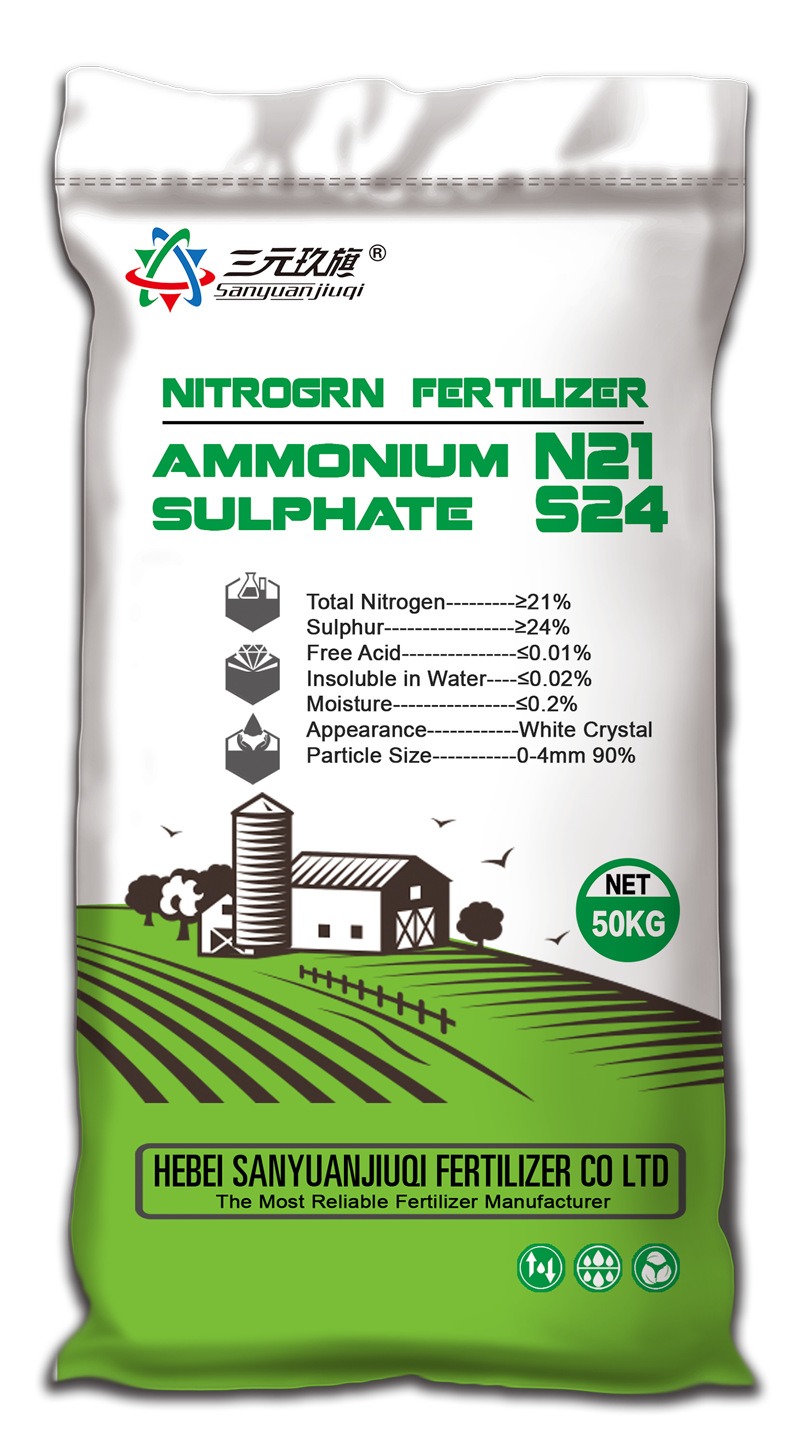
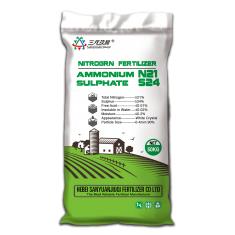
Ammonium sulphate N 21%
Ammonium sulphate
- Main target market:
- Minimum order quantity :
Exhibit parameters
- Exhibit code:21-0-0
- Size of exhibits(mm):
- Model of exhibits:ammonium sulphate
- Materials of exhibits:
- Color of exhibits:
- Place of delivery:China--
- Raw material production place:China--
- Features of exhibits:

Details of exhibits
Introduction
Ammonium sulfate [(NH4)2 SO4] was one of the first and most widely used nitrogen (N) fertilizers for crop production. It’s now less common but especially valuable where both N and sulfur (S) are required. Its high solubility provides versatility for a number of agricultural applications.
Production
Ammonium sulfate (sometimes abbreviated as AS or AMS) has been produced for more than 150 years. Initially, it was made from ammonia released during manufacturing coal gas (used to illuminate cities) or from coal coke used to produce steel. Today, manufacturers make it by reacting sulfuric acid with heated ammonia. To get the crystal size best suited for the application, they control the reaction conditions by screening and drying the particles until achieving the desired size. Some materials are coated with a conditioner to reduce dust and caking.
Byproducts from various industries meet most of the current demand for ammonium sulfate. For example, the nylon manufacturing process produces ammonium sulfate as a co-product. In another, certain byproducts that contain ammonia or spent sulfuric acid are commonly converted to ammonium sulfate for use in agriculture.
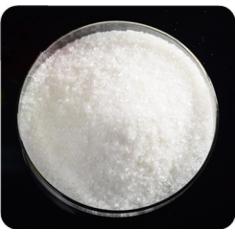
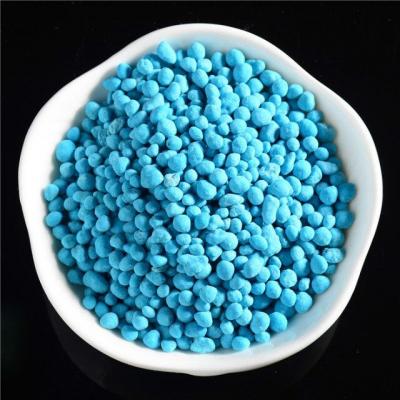
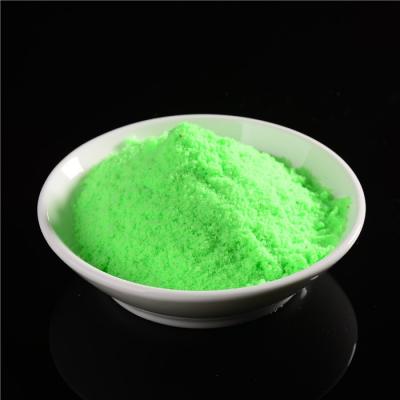
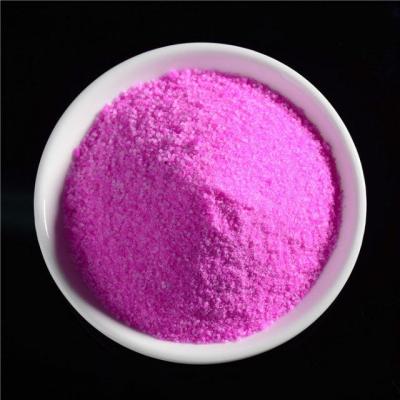
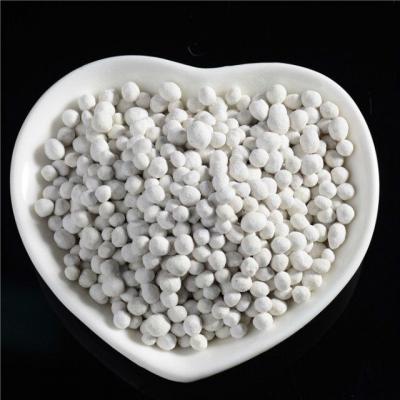
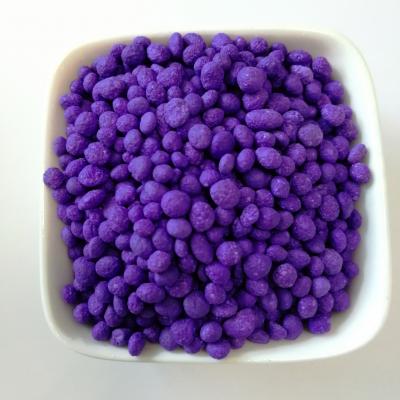
Although the color can range from white to beige, ammonium sulfate is consistently sold as a highly soluble crystal with excellent storage properties. As described earlier, particle size can also vary depending on the intended purpose.
Agricultural use
Growers apply ammonium sulfate primarily where they need supplemental N and S to meet the nutritional requirement of growing plants. Since ammonium sulfate contains only 20.5 percent N, other fertilizer sources more concentrated and economical to handle and transport often make a better choice for N-deficient fields. However, it provides an excellent source of S, which supports or drives numerous essential plant functions, including protein synthesis.
Because the N fraction is present in the ammonium form of ammonium sulfate, rice farmers frequently apply it to flooded soils, since nitrate-based fertilizers are a poor choice due to denitrification losses.
A solution containing dissolved ammonium sulfate is often added to post-emergence herbicide sprays to improve their effectiveness at weed control. This practice of increasing herbicide efficacy with ammonium sulfate works particularly well when the water supply contains significant concentrations of calcium (Ca), magnesium (Mg) or sodium (Na). A high-purity grade of ammonium sulfate often works best for this purpose to avoid plugging spray nozzles.
Specification
| Items | Caprolactam grade | Steel grade |
| Chemical Formula | (CH4)2SO4 | |
| HS Code | 31022100 | |
| Total Nitrogen (N) | 21% Min | 20.5% Min |
| Sulphur (S) | 24% Min | 23.5% Min |
| Free Acid (H2SO4) | 0.01% Max | 0.05% Max |
| Insoluble In Water | 0.02% Max | 0.5% Max |
| Moisture | 0.2% Max | 1.5% Max |
| Iron (Fe) | 0.007% | / |
| Plumbum (Pb) | 0.005% | / |
| Aresenic (As) | 0.0005% | / |
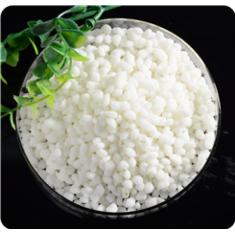
| Apperance | White crystal powder | White compected granula |
| Partical Size | 0-4mm 90% Min | 2-5mm 90% Min |
【APPLICATION】
USE SUGGESTIONS:
General Use: Spray 4 to 7 kg per acre as a foliar application to supplement nutrients available from fertilizers applied to soil.
Aerial Application: Can be mixed at rate of 120kg/m3 of water per acre.
Backpack Sprayer: 1/3 TBSP per liter.
Mixing: Add to mix or spray tank when it is about half full then continue to fill.
Caution: Do not apply to drought stressed plants or during hot, high light conditions or when plants are wilting. Do not use with highly alkaline sprays, dormant oils, dinitro compounds, or lime-sulfur mixtures.
【POSSIBILITY OF MIXING WITH OTHER PRODUCTS】
IT CAN BE MIXED WITH MOST KIND OF FERTILIZERES AND MOST BESTICIDES AND FUNGICIDES EXCEPT OILS OR ANY PRODUCTS CONTAINING CALCIUM OR WHICH ARE HIGH IN ALKALINE.
【STORAGE】
IT SHOULD BE STORED OUT OF DIRECT SUNLIGHT AND PREFERABLY IN A DRY AND COOL PLACE UNDER FROST – FREE CONDITION
 京公网安备 11010502042835号